
Ultimate Guide to Niche Market Expansion for Rentals
June 17, 2026 · 11 min read
Ultimate Guide to Niche Market Expansion for Rentals
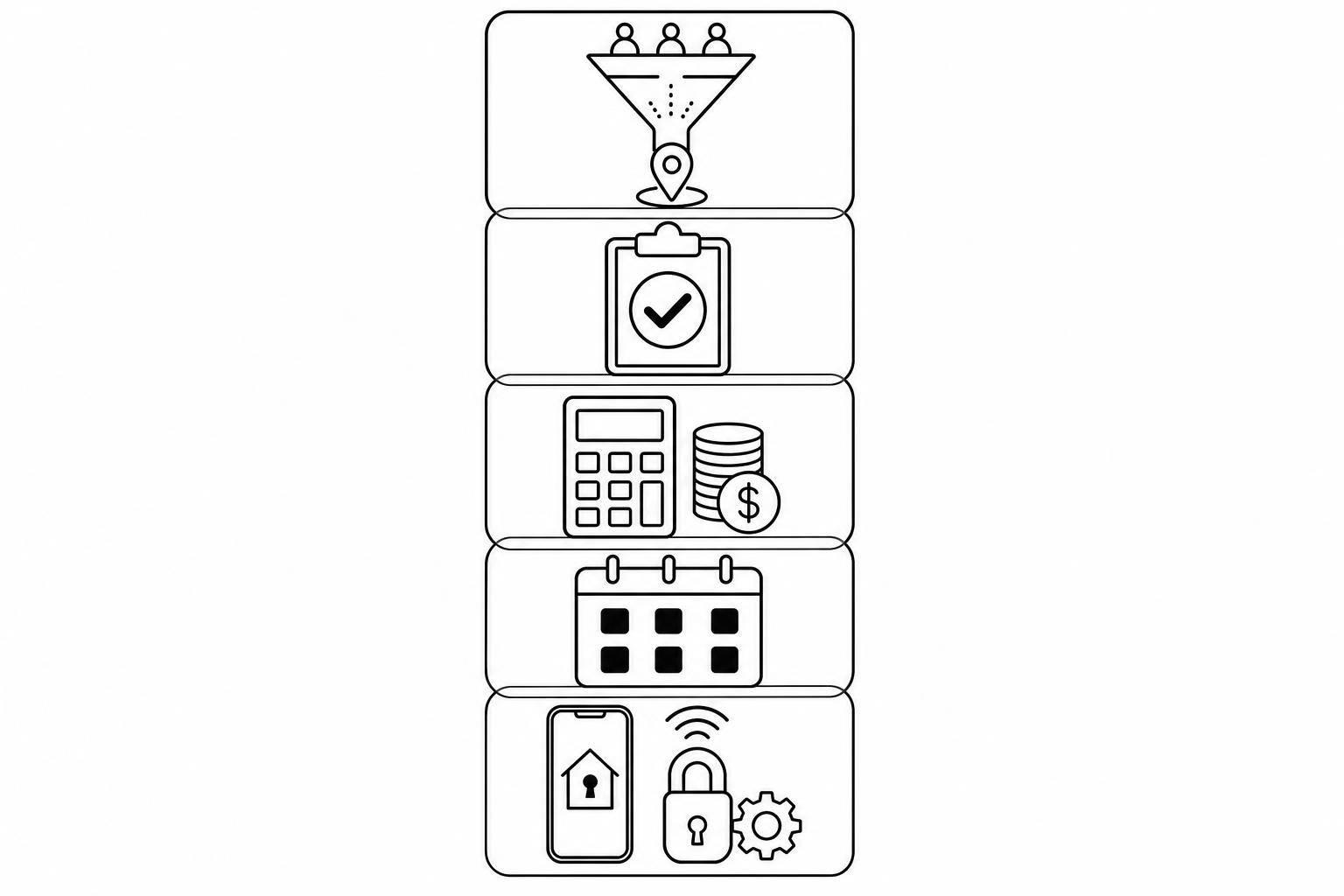
If you want more rental growth, going narrow often works better than going broad. I’d start by picking one clear customer need in one local area, testing demand before buying gear, and only adding inventory when the numbers work.
Here’s the short version:
- Define one tight niche: not “bike rentals,” but _commuter e-bikes near transit stops_ or _enclosed trailers for DIY movers_
- Test demand first: use local search terms, Google Trends, and a 14–21 day prelaunch listing test
- Check the math on one unit: price from lifecycle cost, expected rental days, maintenance, insurance, and margin
- Launch small: run a 3–6 month pilot and track bookings, utilization, revenue, and damage rate
- Set clear cutoffs: around 60%–80% utilization is strong, below 40% is a warning, and above 90% may mean it’s time to add units
- Build the offer around how people book: online checkout, simple pricing, deposits, add-ons, and clear pickup rules
- Keep labor low: use self-service pickup, digital waivers, ID checks, and audit logs so one location can work like the next
- Compare niches with numbers, not gut feel: watch CAC vs. LTV, maintenance spend, seasonality, and revenue per available unit
A few figures stand out. The article notes that 67% of customers prefer to book online. It also points to 15%–25% of annual revenue as a common maintenance reserve, with many rental businesses aiming for payback in under 18 months.
Here’s a quick view of what matters most:
| Area | What I’d check first | | --- | --- | | Demand | Local searches, inquiry volume, service gaps | | Pricing | Daily rate floor, package structure, add-ons | | Fleet | Small pilot inventory sized to tested demand | | Performance | Utilization, revenue per unit, damage rate | | Growth | Repeatable workflows and low labor load |
Bottom line: the best niche is the one with local demand, workable unit economics, and a setup you can run without adding staff every time you grow.
Mastering Rental Growth: Unlocking New Markets & Niches | Rental Roundtable
How to Find and Prioritize the Right Niche

Research local demand, customer behavior, and service gaps
Before you spend a single dollar on inventory, make sure people in your area are already looking for this service. Start with Google Trends, autocomplete, and local search terms. You want steady demand, not a short-lived spike. If search volume looks weak, the niche may be too small to support the business.
If demand seems steady, test it _before_ you buy anything.
A simple way to do that is with a prelaunch availability test. Post a “coming soon” listing on Facebook Marketplace or Craigslist at your target price, then track inquiries for 14–21 days. If people reach out even though you don’t have inventory yet, that’s a strong signal. If inquiries come in at a good clip, move on to the numbers.
Service gaps matter too. In many markets, the opening isn’t demand alone. It’s poor service. Look for things like:
- No online booking
- Limited after-hours access
- Poor asset quality
- Missing asset types
That’s often where a newer operator can step in and win.
Model unit economics before you launch
Once demand looks real, run the math on one asset before you think about scaling. The goal is simple: figure out whether a single unit can earn enough to justify the spend.
A basic formula for your minimum daily rate is: _(Equipment Cost ÷ Target Rental Days Over Lifecycle) × 2.5_.
That 2.5x multiplier gives room for maintenance, insurance, and profit. Say you buy a dump trailer for $6,000 and expect 800 rental days over its lifecycle. Your cost per day is $7.50, which puts your floor rate at about $18.75. Market pricing for dump trailers usually lands between $75 and $150 per day, so there’s still a healthy margin [2].
Use conservative utilization targets when you build your model:
- 70% for peak season
- 40% for shoulder season
- 20% for off-peak [2]
By month three, aim for 8–12 booked days per month. If the business still works at that level, the niche is probably worth chasing. Also, set aside 15%–25% of projected annual revenue for maintenance before you calculate net return [2].
Rank niches by fit, risk, and growth potential
A niche can have demand and still be a bad fit for _your_ business. That’s the part people miss. You need to weigh each option against what you already have, like your fleet, storage space, and local geography.
Use the table below to compare startup cost, pricing, margin, seasonality, and day-to-day workload.
| Niche | Startup Cost | Avg. Daily Rate | Profit Margin | Seasonality | Operational Burden | | --- | --- | --- | --- | --- | --- | | E-Bike Fleet | $20,000–$35,000 | $65–$120 | 40%–55% | Spring–Fall | Medium (maintenance) | | Kayak/SUP | $12,000–$18,000 | $40–$80 | 40%–55% | Summer | Low (durable) | | Dump Trailers | $6,000–$12,000/unit | $75–$150 | Varies | Year-round | Low–Medium | | Drone Fleet | $10,000–$20,000 | Varies | 35%–45% | Year-round | Medium (tech/B2B) | | Ski/Snowboard | $800–$2,500/unit | $45–$85 | Varies | Winter | Medium (fitting) |
The best niches tend to check three boxes: proven demand, payback in under 18 months, and some kind of edge based on your fleet, storage, or location.
Build a Niche Offer That Customers Will Book
Define the customer profile and booking journey
Once you've checked that demand is there, the next move is simple: turn that niche into a booking experience people will finish.
Build the offer around the exact customer your niche points to - who’s renting, why they need the item, and when they book. Someone renting bikes at a trailhead wants a very different experience than a family renting baby gear for a trip. That use case shapes everything: the booking flow, pickup details, timing, and which add-ons make sense.
A phone-based availability check costs you bookings. With 67% of consumers preferring to book online [3], your booking flow needs to work start to finish without a phone call.
Set pricing, packages, and add-ons for the niche
Once the booking flow is mapped out, price the offer based on how people use it. Niche markets do better with clear, structured pricing. A tiered model - where the per-day price drops as the rental period gets longer - nudges customers toward longer bookings with better margins.
| Rental Period | Pricing Approach | Example (Bike Rental) | | --- | --- | --- | | Hourly | Premium rate for short use | $15–$20/hour | | Half-day | 2–3x the hourly rate | $35–$45 | | Full day | Core baseline rate | $55–$75 | | Multi-day | Declining rate per day | $45–$60/day | | Weekly | Significant bulk discount | $250–$350/week |
Add-ons like damage waivers, accessories, and convenience bundles can increase revenue without making the operation much harder to run. Security deposits usually fall between $50 and $200, depending on equipment value, or 15%–30% of the rental total [2][3].
If you automate the deposit hold through your payment processor, the whole process stays cleaner. It also makes it easier to issue refunds within 24–48 hours, which can help keep review ratings high.
Adjust inventory and policies to fit niche needs
After pricing is in place, line up your inventory and policies with the niche’s actual operating risk. Stock for 60%–70% of projected peak demand, and size that inventory to tested demand only.
In niche rentals, equipment quality matters more than it does in a general rental setup. Consumer-grade gear tends to wear out faster under rental use. Commercial-grade equipment is made for frequent use and simpler maintenance [2]. Plan to replace high-wear items every 2–3 seasons, and set aside 15%–25% of revenue for maintenance and replacement [2].
Your policies should match the risk level of the niche too. For higher-risk equipment, use photo-based inspections before and after the rental, along with digital waivers built into the booking flow [3][2].
Launch, Automate, and Scale the Niche
Run a small pilot with clear success metrics
Once pricing and inventory are set, test the niche with a small pilot before you buy more units. Start with limited inventory and a small sample of your target market. Then track four numbers: bookings per asset per month, monthly revenue, damage-and-loss rate, and asset utilization.
Those numbers tell you pretty fast whether the niche has legs. If utilization stays near 10%, the niche likely needs work or a clean exit. If it gets close to 90%, that's a strong sign to add inventory [1].
Numbers alone don't tell the whole story, though. Gather customer feedback at the same time so you can tighten the offer before you scale. And set pass/fail thresholds _before_ launch. That way, you scale only when the pilot proves demand instead of relying on gut feel.
Use contactless workflows to reduce labor and enable 24/7 pickup
If the pilot goes well, automate the parts of the rental process that create the most friction. In niche markets, customers often want pickup on their schedule, not yours. Contactless workflows make that possible without adding more staff.
Lockii fits this well. It can handle online booking, ID verification, SMS/email instructions, digital-lock access, self-service extensions, hire-end photos, and GPS tracking. Put simply, it helps you offer 24/7 pickup without needing staff on site.
Build repeatable systems for multi-location growth
Once the workflow is working, write it down so another location can run the same process. That's where standardized SOPs matter. Without them, quality tends to slip the minute day-to-day personal oversight disappears.
Keep the documentation focused on the steps tied most closely to growth:
- Booking confirmation
- Pre- and post-hire inspections
- Damage reporting
- Maintenance scheduling
Lockii's item audit logs and booking audit logs add a timestamped record of every asset interaction across every location. That makes it much easier to run the same niche experience the same way, even as you add more sites.
Measure Performance and Decide What to Expand Next
Track the metrics that show whether the niche is working
Once the pilot has shown there's demand, the next step is simple: look at the numbers and decide whether to scale, tweak the offer, or walk away.
At this stage, you want a small set of metrics that tells you two things fast: is demand there, and does the niche make money? The KPIs that matter most are revenue per available unit, utilization/occupancy rate, cash-on-cash return, Customer Acquisition Cost (CAC) vs. Lifetime Value (LTV), equipment lifecycle and replacement spend, and seasonality index [6][2][7].
Out of all of them, revenue per available unit matters most because it shows the balance between pricing power and actual demand [6]. A high rate means little if units sit empty. On the flip side, full utilization at weak pricing can still leave money on the table.
Use utilization as your first gut check for niche health. A range of 60%–80% is strong, below 40% points to a problem, and above 90% usually means it's time to add inventory. Annual occupancy should stay above 55% if you want to cover operating costs [2][6]. You should also use that same revenue reserve to judge whether the niche can handle long-term replacement costs [2].
Don't lump everything together. Break results out by location, asset type, and season. A niche can look solid in one market and weak in another. The same goes for seasonality. Treat those swings as signals, not noise, and adjust inventory or pricing based on what the data is telling you.
Compare niche results and allocate capital carefully
When you're deciding where the next round of capital should go, compare niches side by side instead of leaning on instinct. That's where bad bets sneak in.
For example, a niche can post strong margins on paper but still be a drag if it needs too much labor. In many cases, a niche that runs cleanly through contactless workflows is the better bet, even if the headline margin looks a bit lower.
One line in the sand is customer acquisition cost. If CAC exceeds 20% of LTV, that channel is probably too expensive for that niche [7].
Use the table below as a quick filter before expanding:
| Metric | Scale | Pause / Optimize | Exit | | --- | --- | --- | --- | | Utilization Rate | >80% consistently [5] | 50%–65% [6] | <50% [6] | | Maintenance Cost | 15%–25% of revenue [2] | Above budget | >30% of revenue [2] | | Booking Growth (YoY) | Strong upward trend | Flat | Declining | | Seasonality Index | <2.0 [6] | 2.0–3.0 [6] | >3.0 (high risk) [6] |
Conclusion: From niche idea to scalable rental growth
Niche growth usually follows a pretty clear path: find a real gap, check demand with local data, model the unit economics before you spend, shape the offer around the exact customer, run a 3–6 month pilot with pass/fail thresholds, and scale only after that [4].
The businesses that keep growing usually do one thing early: they build systems before growth forces the issue. Contactless workflows, automated communications, digital access, and audit logs aren't just nice add-ons. They're the pieces that let you deliver the same niche experience across multiple locations without adding headcount at the same pace.
Lockii supports that setup with contactless access, automation, and audit logs.
That's how one good niche becomes a model you can repeat.