
5 Revenue Forecasting Models for Rental Businesses
May 18, 2026 · 14 min read
5 Revenue Forecasting Models for Rental Businesses
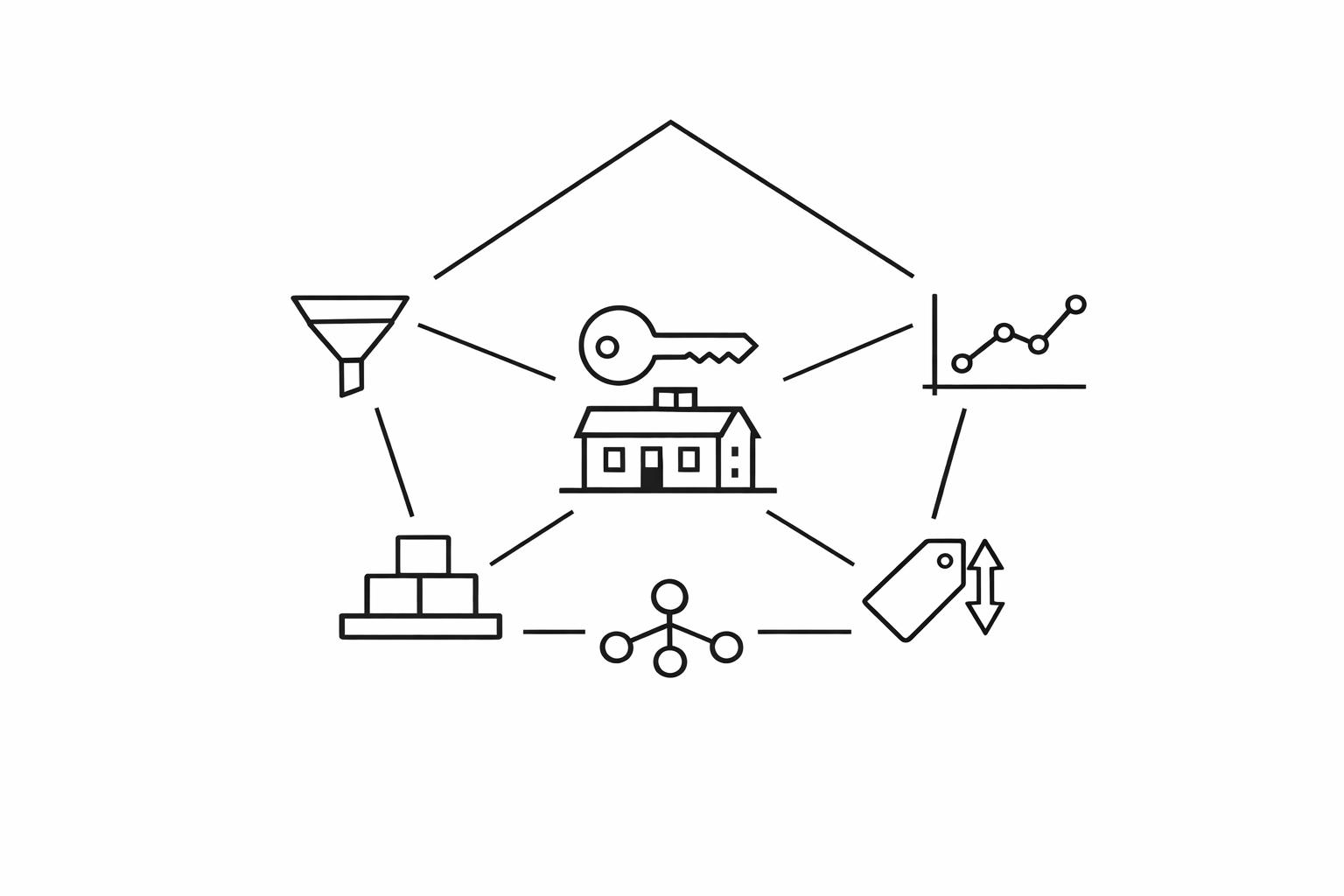
Revenue forecasting is key for rental businesses to estimate income and make informed decisions about pricing, fleet size, and resource allocation. This is especially important in seasonal markets where up to 70% of annual revenue may come from just 3-4 months. Here are five forecasting models rental businesses can use:
- Top-Down Market-Based Model: Starts with the total market size and applies an estimated market share. Best for long-term planning and new businesses.
- Bottom-Up Historical Booking Model: Uses unit-level data (like fleet utilization and average rental price) to build forecasts. Ideal for short-term and quarterly planning.
- Time Series and Seasonality Model: Analyzes historical patterns and external factors (holidays, events) to predict demand. Best for medium- to long-term planning.
- Dynamic Pricing Model: Adjusts forecasts in real time based on demand signals, helping optimize pricing during high or low demand periods.
- Scenario-Based Model: Creates best, base, and worst-case forecasts by adjusting internal and external variables. Useful for both short- and long-term strategies.
Each model has its strengths, and combining them often provides better accuracy. Clean, centralized data is essential for effective forecasting. Tools like Lockii help consolidate booking and operational data, improving forecast precision and decision-making.
::: @figure 5 Revenue Forecasting Models for Rental Businesses: Quick Comparison Guide{5 Revenue Forecasting Models for Rental Businesses: Quick Comparison Guide} :::
STR Revenue Forecasting With Claude AI: The Complete System
::: @iframe https://www.youtube.com/embed/xAh5oaGvTAk :::
Key Metrics and Data Needed for Rental Forecasting
To create an effective rental forecasting model, you have to zero in on the numbers that truly count. Many rental businesses tend to monitor revenue on a surface level, but accurate forecasting demands a deeper focus on metrics that reveal both pricing effectiveness and demand trends.
The four main metrics to prioritize are Average Daily Rate (ADR), Occupancy Rate (or fleet utilization for vehicle and equipment rentals), Revenue Per Available Unit (RevPAU), and Booking Lead Time. Here's a quick breakdown:
- ADR shows how much revenue you're earning per unit per day.
- Occupancy Rate measures how often your units are in use.
- RevPAU, calculated by multiplying ADR and Occupancy Rate, gives you a single efficiency score that reflects overall fleet performance.
- Booking Lead Time tracks the number of days between a booking and the actual pickup, providing insight into demand trends. Longer lead times often signal rising demand, while shorter ones might indicate a slowdown.
| Metric | Formula | What It Tells You | | --- | --- | --- | | ADR | Total Revenue ÷ Units Rented | If your pricing aligns with market demand | | Occupancy Rate | (Units Rented ÷ Available Units) × 100 | Whether your pricing is too low (high occupancy) or too high (low occupancy) | | RevPAU | ADR × Occupancy Rate | Overall revenue efficiency across your fleet | | Booking Lead Time | Days between booking and pickup | A signal of shifting customer demand |
These metrics are essential for building reliable forecasting models. They provide the foundation for predicting future rental revenue and help you make informed decisions. It's also crucial to focus on net rental revenue rather than total revenue for more precise insights, as discussed earlier.
However, having the right metrics is only part of the equation. Centralizing your data makes these numbers actionable. Booking histories, payment records, and external factors like local events or seasonal trends are often scattered across multiple systems, making it harder to track patterns. Tools like Lockii simplify this process by consolidating bookings, orders, and interactions into one platform. This unified view makes it easier to identify trends and input accurate data into your forecasting models.
"The difference between accurate and wishful revenue forecasts... comes down to the data sources you trust and how quickly you respond to changing conditions." - Anna Ellison, Content Marketing, AvantStay [6]
Data-driven strategies can lead to significant results. Operators who consistently track clean, centralized data report revenue growth of 15–30% and fleet utilization improvements of 10–20% [2]. The magic isn’t in overly complex algorithms - it’s in maintaining accurate, well-organized data over time.
1. Top Down Market-Based Revenue Forecasting Model
This model takes a big-picture approach to estimate potential revenue by starting with the overall market size. To use it, first calculate your Total Addressable Market (TAM) - the total revenue potential in your rental category - and then apply an estimated market share. The formula looks like this:
Revenue = Total Addressable Market × Estimated Market Share
Here’s a quick example: If the trailer rental market in your metro area generates $8,000,000 annually and you anticipate capturing 5% of that market, your projected revenue would be $400,000. To refine this estimate, take into account factors like growth trends, economic conditions, and competitor performance.
This approach is especially helpful if you’re new to the market or don’t have historical data to work with. For established businesses, it can act as a benchmark to ensure your growth aligns with the market. For instance, if the market is expanding but your revenue remains the same, it might signal an issue worth investigating.
However, one of the biggest mistakes with this method is being overly optimistic about your market share. Always consider internal limitations, such as the size of your fleet, staffing levels, and actual booking capacity.
"Top-down forecasting sets targets based on the total addressable market (TAM) and assigns realistic market share goals." - Alvaro Morales, Co-founder, Orb [3]
This model is best suited for long-term planning (think 1–3 years or more). While it provides a strategic overview, it’s crucial to balance it with insights from operational data. Up next, we’ll dive into models that use historical booking data to complement this high-level approach.
2. Bottom Up Historical Booking Revenue Forecasting Model
Unlike the top-down method, which starts with the big picture, the bottom-up approach zeroes in on the details. It calculates revenue by analyzing unit-level data and combining the results to create an overall forecast. The formula is simple:
Revenue = Number of Available Units × Utilization Rate × Average Rental Price
Here’s an example: Imagine you manage 20 trailers, expect a 70% utilization rate for the month, and charge $85 per day with an average rental lasting 3 days. Using this formula, you can estimate revenue at the asset level before summing it across your fleet. This granular view lets you identify underperforming units, rather than relying on averages that might mask issues.
A key point to keep in mind: focus on Net Rental Revenue - your actual daily rate - rather than total revenue. Total revenue can be misleading due to factors like cleaning fees or varying commissions, which don’t reflect true asset performance.
For instance, in March 2024, a Freewyld Foundry client managing 25 units noticed two units underperforming by 12–18% compared to the previous year. After reviewing historical booking data, Jasper Ribbers discovered the discrepancy was due to unusually high premium bookings for those units in March 2023, which had inflated the baseline. By comparing current performance to the RevPAR index rather than raw historical totals, they confirmed the units were performing at market average, avoiding unnecessary price adjustments [1].
This model is particularly effective for short-term (1–3 month) and quarterly planning, where historical trends are more dependable. Aim to use a 12-month baseline whenever possible and update forecasts monthly instead of annually to stay agile. If actual bookings deviate by more than 20% from projections, investigate potential causes such as listing errors, pricing issues, or negative reviews. Operators who follow this disciplined, data-focused method often achieve revenue gains of 15–30% and fleet utilization improvements of 10–20% [2].
Next, we’ll dive into a model that uses time series analysis to account for seasonal trends and demand shifts.
3. Time Series and Seasonality-Based Revenue Forecasting Model
This model builds on the bottom-up approach by focusing on patterns over time. It analyzes historical booking data to uncover recurring cycles - weekly, monthly, and seasonal - and uses these trends to predict future revenue. The concept is simple: if trailer rentals consistently surge during Memorial Day weekend and dip every February, you can plan for those patterns.
The model breaks revenue into four components: Trend, Seasonal, Cyclical, and Irregular. Most businesses prioritize Trend and Seasonal factors. In markets with strong seasonality, a single month can account for a large portion of annual revenue. For example, short-term rental operators in Michigan lake house markets often generate 30% of their yearly revenue in July alone [1]. Understanding this ahead of time influences how you manage staffing, pricing, and fleet maintenance.
One effective technique here is seasonality-based extrapolation. To use this method, take a unit's recent monthly revenue and divide it by that month's typical share of annual market revenue. This gives you an implied annual run rate. Jasper Ribbers of Freewyld Foundry illustrated this in April 2026 with a portfolio managing over $190M in annual bookings. For instance, if a unit earned $5,000 in March and March typically represents 10% of the market's annual revenue, the model projects a $50,000 annual run rate [1]. This quick calculation helps benchmark units immediately. After determining the run rate, the model incorporates broader data inputs to fine-tune projections.
Incorporating external signals is equally important. Effective time series forecasting relies on calendar signals (like holidays, school breaks, and day-of-week patterns), external demand drivers (such as local events, weather forecasts, and flight arrivals), and market seasonality benchmarks from industry data [2]. A December 2024 case study on BoomBikes, a U.S.-based bike-sharing company, highlighted how external factors like temperature, year-over-year growth, and weather conditions were key predictors of rental demand. Their model achieved an R² of 0.81, explaining 81% of demand variance with these inputs alone [9]. This demonstrates the importance of integrating weather and calendar data.
This model is most effective for medium-to-long-term planning (3–12 months). For short-term forecasts, place more emphasis on your current booking pace. For projections beyond six months, historical year-over-year comparisons are invaluable. One often-overlooked application: use low-demand periods in your forecast to schedule fleet maintenance. Avoiding maintenance during peak weeks can save you significantly, as lost revenue during high-demand periods can far exceed maintenance costs [2].
4. Dynamic Pricing and Demand-Driven Revenue Forecasting Model
While traditional time series models focus on identifying patterns from past data, this model takes a forward-looking approach. It adjusts revenue projections in real time based on shifting demand signals. Instead of relying solely on historical trends, it uses predictive analytics to anticipate future demand. For example, as booking activity picks up, projected revenue and rates automatically increase. Conversely, when demand slows, the model flags potential gaps early, allowing for a quick response.
A practical application of this is lead-time pricing: offering standard rates for early bookings while adding a 20–30% premium for same-day bookings during peak demand. Another strategy involves utilization triggers - raising rates by 10–15% when projected utilization exceeds 85% or lowering them by 10–20% if utilization is expected to drop below 60% [2]. These adjustments fine-tune revenue forecasts in real time, complementing insights from historical and seasonal data.
This model builds on earlier approaches by incorporating real-time data to refine forecasts continuously. Internally, key metrics like historical booking volume, cancellation rates, current on-the-books revenue, and RevPAV (a combined measure of occupancy and pricing efficiency) are essential [2][6]. Externally, it integrates data from sources like local event calendars, weather forecasts, and inbound flight schedules. For instance, a major concert or a stretch of poor weather can justify price changes of 30–50% [11].
The accuracy of this model surpasses static pricing methods, especially over shorter time frames:
| Forecast Horizon | Traditional Methods | AI-Powered Models | | --- | --- | --- | | 7 days | 65–70% | 92–94% | | 14 days | 55–60% | 85–88% | | 30 days | 45–50% | 75–80% | | 90 days | 35–40% | 60–65% |
_(Source: RenTech Magazine [10])_
Real-world examples highlight the impact of this approach. In 2024, United Rentals implemented AI-driven forecasting across more than 1,400 locations, reducing idle equipment days by 40% and saving $127 million annually by optimizing fleet positioning [10]. Similarly, Sunbelt Rentals combined demand forecasting with dynamic pricing algorithms, achieving a 15% boost in revenue per asset while cutting back on manual discounting [10]. According to United Rentals' CTO:
"The AI doesn't just tell us how much demand to expect - it tells us exactly which SKUs will be needed, where, and when. That precision has transformed our operations." [10]
For smaller rental businesses, access to these tools is becoming more feasible. By 2026, advanced forecasting features are increasingly embedded in standard rental management platforms, eliminating the need for costly standalone solutions [2]. The ideal window for rate adjustments during high-demand periods is 60–90 days out, providing a prime opportunity to maximize revenue before inventory is fully booked [6].
5. Scenario and Driver-Based Revenue Forecasting Model
Expanding on dynamic pricing strategies, the scenario-based model offers a flexible framework designed to prepare businesses for a range of potential outcomes.
Unlike models that focus on a single revenue projection, this approach develops Best, Base, and Worst case forecasts. It does so by adjusting critical internal factors like fleet utilization, pricing strategy, maintenance downtime, and ancillary revenue (which can account for 15–25% of total revenue) alongside external factors such as seasonality, major events, economic trends, and online booking behavior. With approximately 67% of rental customers now preferring online bookings, monitoring digital conversion rates has become a key priority [2][8].
"Scenario-based forecasting builds multiple revenue projections - best case, base case, and worst case - to prepare for different business outcomes." - Ninad Pathak, Factors.ai [7]
The strength of this model lies in its go/no-go triggers - specific thresholds that guide decision-making. For instance, if projected fleet utilization falls below 60%, it signals a need to pause fleet expansion or freeze discretionary spending. On the other hand, if utilization exceeds 85%, it may be time to ramp up hiring or expand inventory. These predefined triggers are baked into the model to ensure timely responses [12].
| Scenario | Driver Assumptions | Strategic Action | | --- | --- | --- | | Optimistic (Best) | Utilization >85%, peak pricing, low downtime | Accelerate hiring and fleet expansion | | Base Case | Standard seasonal patterns, average daily rates | Execute standard operating budget | | Pessimistic (Downside) | Utilization <60%, high maintenance, macro downturn | Trigger spending freezes, delay Capex |
This structured model ensures that businesses can act swiftly and strategically, whether capitalizing on opportunities or mitigating risks. When combined with other forecasting methods, it becomes an essential part of a well-rounded strategy, identifying both growth potential and contingency plans.
The model proves useful across both short- and long-term planning horizons. In the short term (weeks to months), it helps manage cash flow and staffing needs. Over the long term (one to five years), it supports investor communications and major decisions like opening new locations [3]. To maintain accuracy, forecasts should be compared with actual performance monthly. As one fractional CFO explains:
"A good forecast isn't about predicting the future perfectly - it's about creating a realistic range of scenarios that inform decision-making." - Fractional CFO School [5]
Businesses that adopt data-driven forecasting, including scenario modeling, often achieve 15–30% revenue growth and fleet utilization improvements of 10–20% compared to those relying on static assumptions [2].
Combining These Models With Your Rental Tech Stack
Once you've explored the different forecasting models, the next step is integrating them into a strong tech stack to improve accuracy. By combining these models, you can create a more dynamic and well-rounded revenue forecast. For short-term projections (1–2 months), prioritize _bottom-up booking data_. For medium-term planning (3–6 months), focus on _seasonality-based models_. And for long-term forecasts (6–12 months), lean on _year-over-year historical comparisons_ to guide your strategy [1].
When multiple models align, it boosts your confidence in the forecast. However, if the models differ by over 20%, it signals areas that need closer examination [1].
"Revenue forecasting shouldn't feel like a battle against spreadsheets and fragmented data. Modern finance teams need faster, more accurate ways to plan." - Ryan Winemiller, HiBob [4]
The real challenge often lies not in the forecasting models themselves but in the fragmented data they rely on. 70% of rental companies report losing valuable time managing 3–4 disconnected systems [8]. To fully benefit from these forecasting models, a unified tech platform is key. Centralizing your data eliminates the inefficiencies and errors caused by juggling multiple systems.
Platforms like Lockii streamline this process by consolidating critical operational data. Here's how it helps:
- Booking audit logs provide a clean historical record, essential for bottom-up and time-series forecasting.
- Maintenance tracking allows you to schedule repairs during slower periods, avoiding the 3–5x revenue losses that downtime during peak weeks can cause [2].
- Self-service order extensions ensure real-time inventory accuracy, keeping near-term projections aligned with actual bookings.
By centralizing these tools, you can empower all the forecasting methods discussed, ensuring your revenue estimates are both agile and precise.
This approach shifts static, annual forecasts into continuously updated tools. With every new booking or maintenance update, your revenue outlook becomes sharper, turning reactive adjustments into proactive planning.
Conclusion
There’s no one-size-fits-all forecasting model for rental businesses. The best approach depends on your specific circumstances - how much data you have and the scale of your operations. Use the guide below to determine which model aligns with your business size and data availability.
| Business Size | Best-Fit Model | Data Needed | | --- | --- | --- | | Small / Startup | Top-Down or Historical Growth | Low - market estimates | | Mid-Sized (5–100 units) | Bottom-Up or Time-Series | Medium - 3–12 months of bookings | | Enterprise (100+ units) | Dynamic Pricing or Scenario-Based | High - multi-source, real-time data |
If you’re just starting out, a simple model like historical growth offers a solid foundation and is far better than relying on guesswork for pricing and planning. As your data grows, you can adopt more advanced methods. Businesses that do often see revenue increases of 15–30% and improved fleet utilization by 10–20% [2].
"A good forecast isn't about predicting the future perfectly - it's about creating a realistic range of scenarios that inform decision-making." - Fractional CFO School [5]
However, even the best forecasting models are only as good as the data they’re built on. That’s where tools like Lockii make a difference. With features like booking audit logs, maintenance tracking, self-service order extensions, and real-time inventory visibility, Lockii ensures you have clean, centralized data. And it does this without the hefty price tag of standalone enterprise tools.
FAQs
::: faq
Which forecasting model should I start with for my rental business?
For rental businesses just getting started, the historical growth rate model can be a straightforward option. This approach relies on past performance to estimate future revenue, making it a solid starting point for businesses experiencing consistent growth.
As your business expands, you might want to explore more detailed methods like bottom-up forecasting. This model takes into account specific elements such as booking volume and rental prices, offering more precise predictions and helping fine-tune your operations. :::
::: faq
How much booking history do I need to forecast revenue accurately?
The amount of booking history you’ll need depends on your forecasting model and how much demand fluctuates. Typically, having at least 12 months of data is a good starting point. This timeframe can highlight patterns, seasonal trends, and market cycles.
If you're using AI-based models, having more historical data can significantly improve accuracy. Begin with one year of booking history, and make it a habit to update your data regularly. Doing so helps refine your forecasts and keeps them aligned with changing market conditions. :::
::: faq
How often should I update my revenue forecast?
Revenue forecasts need regular updates - ideally every quarter. This approach helps you adjust for seasonal trends, changes in market dynamics, and fluctuations in your business’s performance, ensuring your projections stay accurate and useful. :::