
How Real-Time Fraud Monitoring Works
May 3, 2026 · 9 min read
How Real-Time Fraud Monitoring Works
Real-time fraud monitoring is a game-changer for rental businesses, especially those relying on automated systems like contactless self-service rentals. It detects and blocks fraudulent activity in milliseconds, preventing theft before it happens. Here's why it matters:
- Fraud is rising: Over $65 million lost in rental scams from 2020 to 2025, with incidents costing up to $50,000 each.
- Traditional methods are slow: Post-transaction detection often flags fraud too late, after assets are stolen or funds are unrecoverable.
- Real-time systems are faster and smarter: They analyze data instantly, using AI and machine learning to spot anomalies, validate IDs, and flag suspicious behavior.
These systems reduce fraud losses by up to 80%, while minimizing false positives by 40-60%. They also prevent scams like fake IDs, synthetic identities, and fraudulent listings. By automating verification and blocking high-risk transactions, businesses can protect assets and improve customer trust. This is a critical step when building a contactless rental process.
Key Features:
- Speed: Decisions made in under 500 milliseconds.
- Accuracy: AI-driven algorithms detect fraud patterns and inconsistencies.
- Actionable Results: Transactions are scored and flagged, with critical risks blocked immediately.
Real-time monitoring isn’t just a tool - it’s a necessity for staying ahead in an increasingly digital rental landscape.
How to scale payment systems with real-time fraud detection | Vector databases | Distributed SQL
::: @iframe https://www.youtube.com/embed/xlSdfLKaZC0 :::
How Real-Time Fraud Monitoring Works
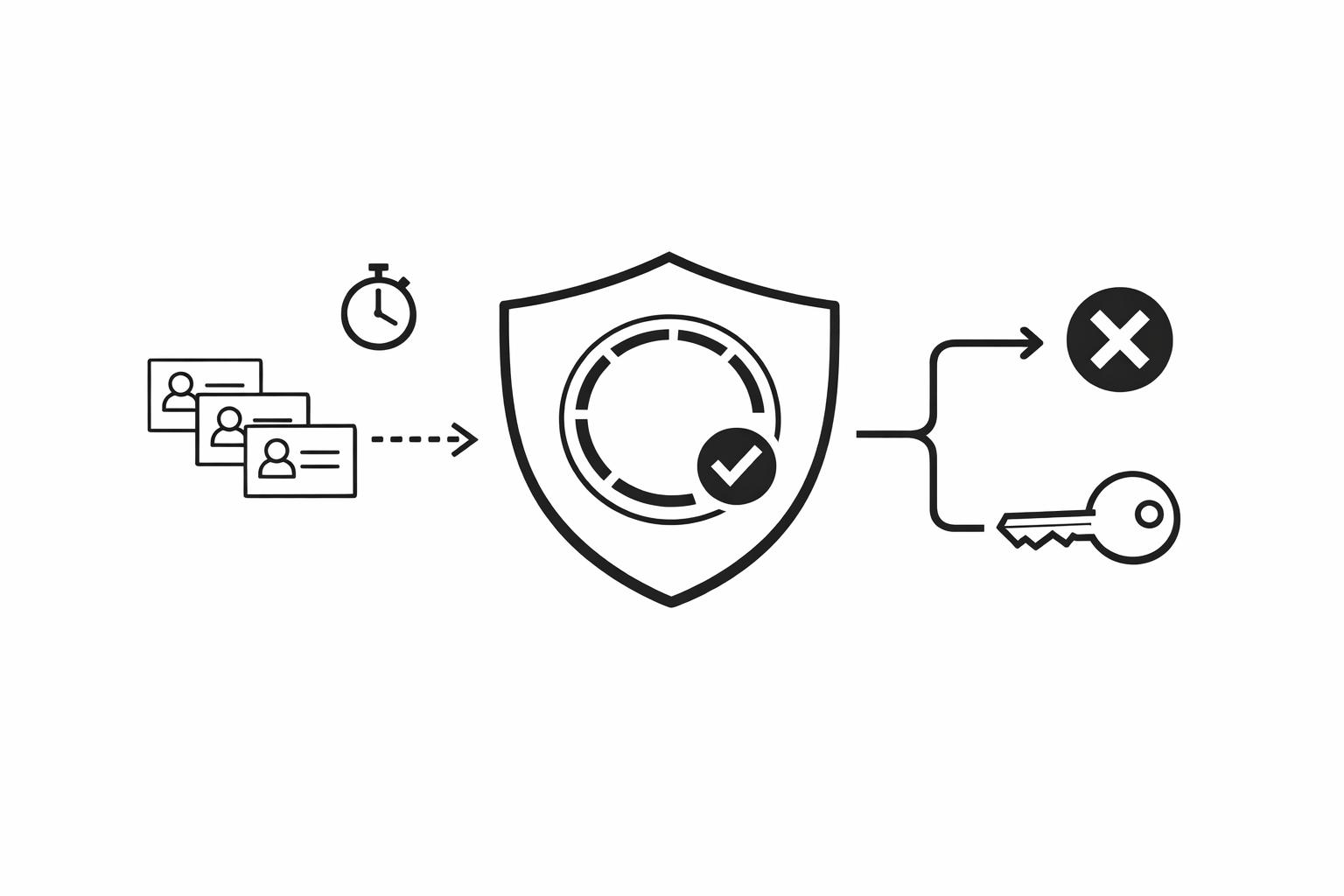
::: @figure How Real-Time Fraud Monitoring Works in Under 500 Milliseconds{How Real-Time Fraud Monitoring Works in Under 500 Milliseconds} :::
Real-time fraud monitoring systems handle data capture, evaluation, and scoring in less than 500 milliseconds [9][2]. Each step is carefully designed to detect fraud instantly, analyzing multiple data points at once to decide whether a transaction should proceed, be flagged for review, or be blocked outright.
Data Collection and Analysis
The process kicks off as soon as a transaction begins. It captures key details like transaction amounts, user identities, locations, device IDs, IP addresses, and timestamps [9]. For rental businesses, this extends to monitoring platforms like Facebook Marketplace, Craigslist, Zillow, and Zumper to spot unauthorized duplicate listings of equipment - a common trick fraudsters use to scam unsuspecting victims [3][1].
Identity verification and real-time monitoring play a pivotal role here. Advanced systems leverage AMVA (American Association of Motor Vehicle Administrators) data to validate government-issued IDs by scanning barcodes and cross-referencing them with official databases [4]. They also use "Likeness Checks", where a live selfie provided by the user is compared to the photo on their ID to prevent impersonation [4]. On top of that, phone reputation scoring helps flag temporary or masked VOIP numbers that fraudsters often rely on to stay under the radar [4].
All these data points are then fed into sophisticated algorithms for further analysis. This integration is a key part of how companies automate rental business operations to improve security and efficiency.
Machine Learning and Pattern Recognition
Machine learning algorithms are the backbone of fraud detection, spotting patterns and irregularities that hint at fraudulent activity. For instance, these systems scrutinize thousands of document features - like metadata, font styles, spacing, and formatting - to detect subtle alterations in financial documents, such as bank statements or pay stubs, that would go unnoticed by human reviewers [10][11][12]. This level of detail is crucial, especially since nearly 1 in 10 income documents submitted by rental applicants is reportedly fake or tampered with [11].
Behavioral analysis is another key component. Machine learning models compare a user’s current behavior with their historical activity, peer group norms, and timing patterns [9]. For example, if a customer who typically rents equipment for $200 suddenly tries to book a $2,000 rental from a different state using a new device, the system flags this as suspicious. These algorithms can also detect synthetic identities - fraudulent profiles created by blending real and fake personal information - by identifying inconsistencies across data points [10].
Risk Scoring and Alert Systems
After identifying patterns and anomalies, the system consolidates its findings into a risk score. This score, ranging from 0 to 100, is determined by combining rules-based triggers (e.g., flagging transactions over a certain dollar amount) with AI-driven anomaly detection that highlights unusual behaviors [9][2].
Transactions are then sorted into risk tiers:
- Low-risk (0–30): Automatically approved.
- Medium-risk (31–60): Approved but flagged for later review.
- High-risk (61–85): Held for immediate review by an analyst (within 15 minutes).
- Critical-risk (86–100): Blocked instantly and escalated to senior compliance or security teams [2].
"Real-time fraud detection systems can identify and halt fraudulent transactions by ingesting real-time transaction data streams, analyzing them for fraud, and exposing fraud risks, all within milliseconds after a transaction is initiated." - Joe Karlsson, Developer Advocate, Tinybird [8]
Businesses are notified through real-time dashboards, automated CRM alerts, or tools like Slack, email, and SMS [8][4]. This ensures immediate action can be taken, whether it’s stopping a digital lock code from being issued or freezing an account before any equipment is accessed.
Automated Fraud Prevention Actions
When a transaction is flagged as suspicious, real-time fraud monitoring systems don't just stop at sending alerts - they act immediately to safeguard your business. These actions occur in milliseconds, intercepting fraud before it can lead to financial loss or stolen equipment. By pairing these automated steps with rapid risk assessments, businesses create a seamless and effective fraud prevention process.
Blocking Suspicious Transactions
If a transaction receives a critical-risk score (86-100), the system instantly blocks it, halting any further activity. This means no digital lock codes are issued, no payments are processed, and the booking never appears on your calendar [2]. For rental businesses, this is especially important since only about 7% of stolen equipment is ever recovered, making prevention the best defense [5].
Using AI anomaly detection, the system identifies high-risk behaviors that traditional rule-based methods might overlook. This proactive approach can reduce fraud losses by up to 80% while cutting false positives by more than 40% [2].
User Authentication and Verification
For flagged transactions, the system introduces targeted verification prompts - extra steps designed to confirm the user’s identity without adding unnecessary friction. These prompts might include likeness checks, IP address verification, or phone reputation scoring [4].
"A few smart speed bumps are exactly what keep your properties safe and your team focused on real prospects, not dealing with bad actors." - Stephanie Hardeman, Consultant, StreamWorksPM [4]
Platforms like Lockii integrate these verification layers directly into the booking process, ensuring that user identity is confirmed before issuing access codes or GPS tracking credentials.
Account Freezing and Manual Review
For transactions in a high-risk range (61-85) or those triggering matches on sanctions or watchlists (like OFAC databases or Politically Exposed Persons lists), the system temporarily freezes the account and escalates it for manual review. A human analyst reviews these cases within 15 minutes, allowing legitimate customers to proceed quickly while keeping fraudsters at bay [2].
For larger transactions - such as equipment rentals exceeding $2,000 or updates to bank details - businesses can implement dual-approval systems. This requires two team members to sign off before the transaction is finalized, adding an extra layer of security. While automated systems handle most decisions, this approach ensures human judgment is applied to edge cases that need additional context and discretion [6].
Challenges and Limitations
Real-time fraud monitoring systems, while effective, are far from flawless. Even the most advanced tools face hurdles that can impact both security and the customer experience. Being aware of these shortcomings helps rental businesses set realistic expectations and make informed decisions about potential tradeoffs.
False Positives and Customer Impact
Fraud detection systems that are overly sensitive can mistakenly flag legitimate customers as threats. This not only creates unnecessary friction but can also result in lost bookings. For instance, when a system is tuned too aggressively, valid transactions might be declined, or customers could face extra verification steps, slowing down the rental process. According to recent data, 65% of property management professionals admit they are "not confident" in their current fraud prevention tools [13]. Striking the right balance between robust protection and a smooth user experience is critical, particularly for maintaining customer trust and satisfaction.
Resource and Cost Requirements
For smaller rental businesses, implementing fraud monitoring systems can be a daunting task.
"If you're running a smaller operation, you might be more vulnerable since you're likely handling many roles yourself without a dedicated fraud detection team", says Jake Belding from Buildium [6].
Beyond staffing challenges, these businesses often need to invest in third-party tools for identity verification, credit checks, and bank account validation. There's also the cost of hardware like electronic lockboxes, smart locks with time-sensitive codes, and GPS tracking devices. These tools require not only significant upfront investment but also ongoing maintenance. Without a centralized data system, tracking audit trails and spotting fraud patterns becomes even more complicated, adding to the burden.
Keeping Up with Evolving Fraud Tactics
While businesses work to address internal challenges, external threats are constantly changing. Fraudsters are quick to adapt, often outpacing system updates.
"Fraud evolves to circumvent whatever defenses are most common", explains Nina Fouche from RentEngine [7].
For example, as ID verification tools like selfie matching and geolocation checks become more widespread, scammers have shifted their strategies. Some now lure legitimate users into verification traps, while others rely on synthetic identities and AI-generated documents, making it increasingly difficult for automated systems to differentiate between real and fake information. Combating these ever-changing tactics demands regular system updates, ongoing staff training, and a commitment to staying vigilant.
Conclusion
Benefits for Rental Businesses
Real-time fraud monitoring systems validate identity, location, and payment details before deposits are processed, helping rental businesses reduce fraud losses and protect their assets. According to the FTC, rental scams resulted in over $65 million in losses between January 2020 and June 2025 [7]. By automating these processes, companies can minimize the need for manual reviews, saving time and improving overall efficiency.
These systems also play a critical role in protecting brand reputation. If customers believe they’ve been scammed - even when fraudsters are impersonating your business - the trust damage can be long-lasting. Automated monitoring prevents fraudulent reposts of listings before they spread. For instance, in 2024, Property Shield successfully removed 318,000 fraudulent listings that had been scraped and reposted online [7]. For self-service rental businesses using contactless access systems, layered verification acts like a digital barrier, ensuring that only verified customers receive access codes. This not only enhances security but also allows teams to focus on business growth instead of fraud investigations.
With these established advantages, the future of fraud prevention holds even more promise, offering increased automation and efficiency.
The Future of Fraud Prevention
Real-time fraud detection systems are already making a significant impact, but next-generation technologies are set to take things further. As fraud tactics evolve, monitoring systems are keeping pace by integrating tools like behavioral biometrics and advanced AI capabilities. For example, while current systems detect fraud within milliseconds, future advancements aim to push these limits even further.
"Fraud evolves to circumvent whatever defenses are most common. ID verification got stronger, so scammers stopped trying to pass it", says Nina Fouche from RentEngine [7].
The rental industry must remain equally adaptive. Future systems will likely feature tighter integration between fraud monitoring, identity verification, and automated compliance tools. Platforms like Lockii, which combine digital locks, identity verification, and GPS tracking, exemplify how automation can simplify operations. These innovations will provide rental businesses - big and small - with access to high-level security solutions, all without the complexity or costs typically associated with enterprise systems.
FAQs
::: faq
What data signals matter most for real-time fraud monitoring?
Detecting fraud in real-time relies on identifying specific patterns and inconsistencies. For instance, abnormal user behaviors - such as making multiple bookings simultaneously or logging in from unusual locations - often serve as red flags. Similarly, inconsistent application data can indicate fraud, like the use of fake IDs or tampered documents.
Another effective strategy is keeping an eye on external data sources. Monitoring platforms like social media or rental advertisements can help uncover fraudulent listings. By analyzing these signals continuously and in real time, rental businesses can respond swiftly, minimizing financial risks and preventing potential scams. :::
::: faq
How do you choose risk score thresholds without hurting conversions?
To determine effective risk score thresholds, begin by examining the distribution of risk scores. Here's a simple approach:
- Low-risk transactions: Approve scores at or below 5.00 without additional checks.
- High-risk transactions: Reject scores at 50.00 or above outright.
- Middle-range scores: Conduct manual reviews for transactions that fall between these ranges.
Adjust these thresholds gradually over time to find the right balance between preventing fraud and maintaining a seamless experience for your customers. :::
::: faq
What happens if a booking is flagged during self-service pickup?
If a booking gets flagged during self-service pickup, the system steps in to handle it immediately. It automatically blocks access, triggers extra verification processes, and notifies staff or security to review the situation. This process helps tackle suspicious activity quickly and securely. :::