
Competitive Analysis Tools for Rental Businesses
April 28, 2026 · 11 min read
Competitive Analysis Tools for Rental Businesses
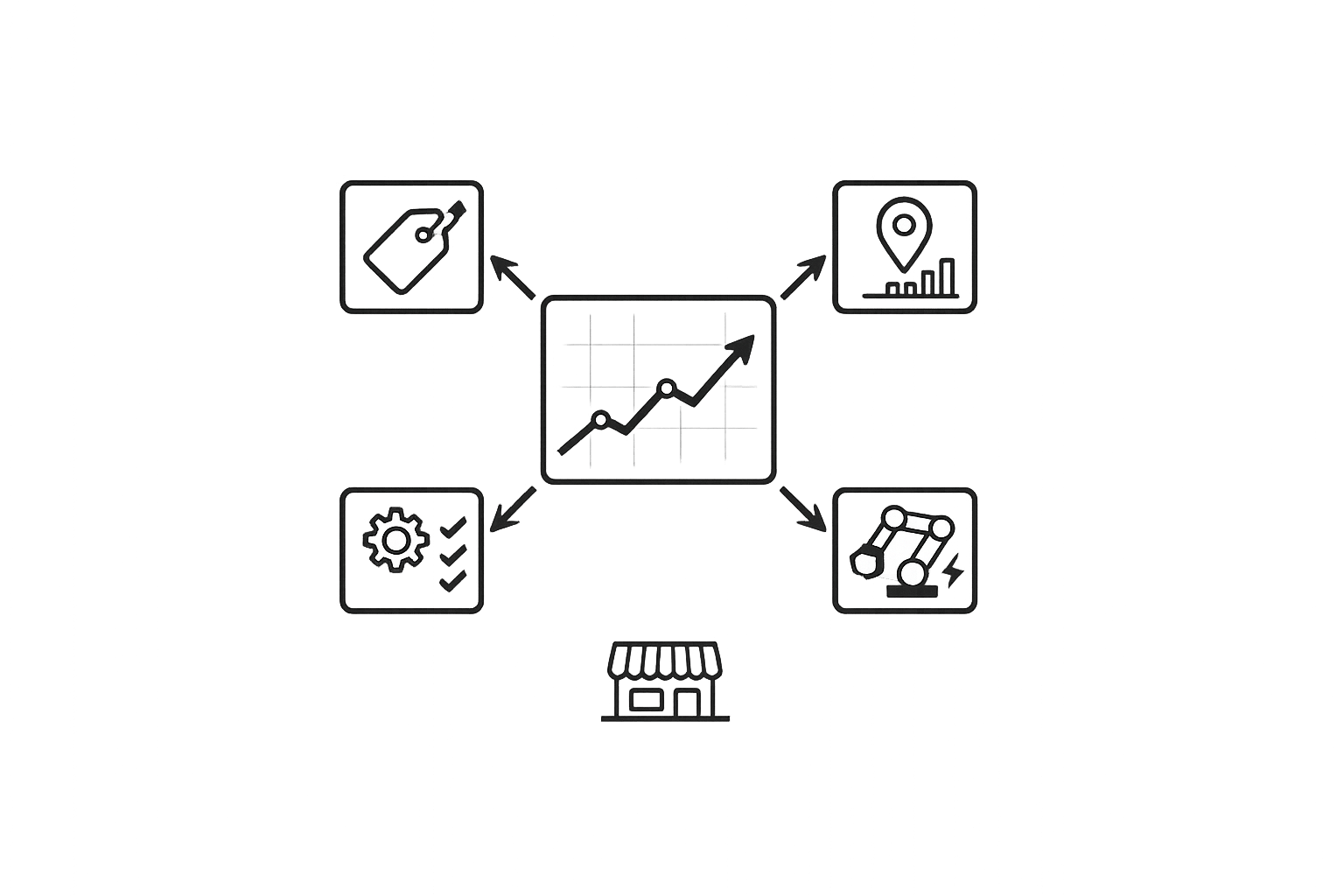
Running a rental business without understanding your competition can hurt your growth. Tools for competitive analysis help you monitor competitors, adjust pricing, and improve efficiency. Here’s a quick breakdown of four types of tools to consider:
- [Lockii](https://www.lockii.app/): Automates bookings, pricing, and fleet management with integrations like Stripe and Zapier. Supports multi-location businesses for $12/month per locked item.
- Market Data Platforms: Track competitor pricing, demand trends, and customer feedback. Examples include Ratemetrics ($99/month) and StorTrack ($36/month for large operations).
- Pricing Optimization Tools: Use AI to adjust rates based on demand and market data. Platforms like PriceLabs and Wheelhouse claim up to 50% revenue growth.
- Operations Management Tools: Handle maintenance, inventory, and customer communication. These tools reduce errors and save time, especially for businesses with multiple locations.
Quick Comparison:
| Tool Type | Purpose | Cost Range | Key Features | | --- | --- | --- | --- | | Lockii | Booking & fleet management | $12/month per item | Automation, integrations, GPS | | Market Data Platforms | Competitor tracking | $36–$99/month | Local insights, API access | | Pricing Optimization Tools | AI-driven pricing adjustments | $19.99+/month | Dynamic pricing, revenue growth | | Operations Tools | Daily task management | Varies | Maintenance, customer communication |
These tools save time, reduce manual errors, and help businesses stay ahead in competitive markets. Combining them can boost efficiency and profits.
::: @figure Competitive Analysis Tools Comparison for Rental Businesses{Competitive Analysis Tools Comparison for Rental Businesses} :::
How to Compare Your Vacation Rental to the Competition - AirDNA Tutorial
::: @iframe https://www.youtube.com/embed/KicpnSx2rWw :::
sbb-itb-eb44693
1. Lockii
Lockii (https://lockii.app) brings competitive intelligence right into your rental operations. By analyzing customer interactions, booking trends, and operational data, it delivers actionable insights to fine-tune your processes.
Automation Features
Lockii automates the entire rental process. With its Express Checkout, customers can complete their bookings in less than 10 minutes[4]. The system handles identity verification, insurance checks, and payment processing automatically. Using IglooHome digital locks, it enables 24/7 pickups and returns, while GPS tracking ensures real-time asset monitoring. Automated SMS and email updates keep renters informed, and self-service features let them extend bookings and settle extra payments without hassle.
"Lockii has made our business efficient in managing our bookings; saving us a lot of time to focus on the growth of the business." - Charlie Haddad, Operator, Trailer 4 Hire[4]
To ensure assets are well-maintained, Lockii uses hire-end photos and quizzes for condition monitoring. This not only documents the state of assets but also highlights damage trends and user behavior, helping operators make smarter decisions.
Integration Capabilities
Lockii integrates with major tools like Stripe for payments, Zapier for workflow automation, and IglooHome for lock management. Its embeddable booking widgets let businesses maintain a seamless customer experience directly on their websites, keeping users engaged within their brand.
Scalability
Lockii is built to handle operations across 200+ locations and fleets ranging from 6 to 600 units[4]. Its multi-location tools streamline coordination between maintenance teams, support cross-selling across branches, and offer unified reporting for the entire network. This scalability allows businesses to confidently expand into new markets.
"It's allowed us to operate fully automated, 24/7 trailer rentals and scale that side of our operation with confidence." - Yvann Karamoko, Operator, The Trailer Co[4]
With its robust automation, real-time tracking, and data-driven insights, Lockii equips rental businesses to thrive in fast-changing markets. It’s a powerful tool for operators looking to streamline processes and grow efficiently.
2. Market Data Platforms
Market data platforms provide rental businesses with a detailed look at what their competitors are doing in nearby markets. These tools monitor competitor pricing, customer feedback, inventory availability, and demand trends in specific areas. Instead of relying on manual checks, businesses can access automated updates on pricing shifts, market patterns, and customer sentiment. Here's how these platforms deliver valuable local insights and real-time analytics.
Market Coverage
The most effective platforms prioritize local market data. For instance, Ratemetrics focuses on market insights within a defined radius (priced at $99/month). StorTrack Optimize covers over 71,000 locations in the U.S. and Canada, along with more than 13,600 locations across Europe. Meanwhile, [Localytics](https://localytics.co/) offers a detailed competitive dashboard updated within just 2.5 hours [5][6].
"We needed to know what market share we had in our niche, hyper locally, and how to take more. Y'all gave us that."
>
- Brock Dugger, Founder, Busy Bee [5]
Automation Features
In addition to their market coverage, these platforms simplify routine tasks by automating data collection and analysis. This allows rental businesses to act quickly based on data-driven insights. For example:
- Ratemetrics sends daily email updates summarizing market activity [1].
- Localytics generates AI-powered SWOT reports, highlighting strengths and weaknesses.
A real-world example: In 2026, Nathan Stone, CEO of Supreme Plumbing, used Localytics to identify a franchise outperforming his business in three neighborhoods. By adjusting his strategy based on these insights, his company saw an annual revenue boost of $47,000 [5].
Integration Capabilities
Many of these platforms also offer API access, making it easier to integrate competitive data into existing systems [6]. For businesses operating across multiple locations, this centralization of market intelligence is invaluable. This is especially true when franchising rental businesses across multiple territories. Some platforms, like StorTrack, even provide Zapier integration, enabling seamless workflows with tools like Google Sheets, Slack, or CRMs - no custom development required [3]. StorTrack also offers tiered pricing, dropping to $36 per store per month for businesses managing 21 or more locations, making it a cost-effective choice as operations grow [6].
3. Pricing Optimization Tools
Pricing optimization tools take market insights to the next level by dynamically adjusting rates to boost revenue. These platforms go beyond just tracking competitors - they analyze demand, competitor pricing, and fleet usage in real time to determine the best rates.
Automation Features
These tools rely on AI-powered dynamic pricing, which processes hundreds of market variables at once. For instance, DPGO's software evaluates over 200 market data points, helping users see an average 50% revenue growth and a 30% boost in occupancy rates [11]. Similarly, PriceLabs oversees daily pricing for more than 600,000 properties in over 150 countries [8], and Wheelhouse users have reported nearly 40% higher profitability thanks to its dynamic pricing functions [9].
"PriceLabs has impacted both my occupancy and my ADR positively."
>
- Terry Whyte, Property Manager & Owner, Anna Maria Island Beach Rentals [8]
Beyond revenue growth, these tools drastically cut down on manual work. Dynamic pricing can reduce the effort needed for manual adjustments by up to eight times [11]. In industries like equipment rentals, these tools fine-tune rates based on fleet utilization - raising prices by 10–15% when usage hits 61–85% [2]. Advanced systems for heavy equipment even use telematics data to adjust rates based on machine hours or engine load, ensuring costs like wear and tear are accounted for [10].
Scalability
As businesses expand, pricing tools become more affordable per unit. PriceLabs, for example, offers flat monthly fees starting at $19.99 for one unit and scaling up to $644 for 100 units [9]. Beyond charges a 1% fee on all bookings made through its platform [9], while Transparent provides options ranging from a free version to $499 per month for more advanced business intelligence [9].
To maintain profitability, operators can set price floors - minimum rates that cover costs like operations and depreciation - even when AI suggests lower rates [2][11]. These tools work hand-in-hand with competitor analysis platforms, creating a well-rounded strategy for rental businesses to stay ahead in the market.
4. Operations Management Tools
Streamlined operational workflows are a cornerstone of growth for rental businesses. While pricing and market insights are crucial, managing the day-to-day tasks efficiently is what keeps everything running smoothly. Operations management tools are designed to handle repetitive tasks like maintenance tracking, customer communication, and inventory management - especially when managing multiple locations.
Automation Features
Automating rental business operations is a game-changer for reducing manual labor and minimizing errors. Features like maintenance coordination, auto-renewing leases, digital contract creation, and sending late payment reminders help eliminate time-consuming processes. These tools not only save time but also reduce the risk of small mistakes adding up over time.
For example, Lockii offers automation for identity verification, customer communication, AI support, and fleet monitoring. Businesses using comprehensive systems like these report saving around 10 hours of administrative work per month [7].
Integration Capabilities
A standout feature of operations tools is their ability to integrate with other systems, creating smooth and error-free workflows. For instance:
- Accounting Software: Integrations with platforms like QuickBooks or Xero remove the need for double data entry.
- Payment Processors: Tools like Stripe simplify the process from contract creation to payment collection.
- Telematics Systems: APIs can assign maintenance tasks automatically based on real-time data.
- E-commerce Platforms: Syncing online storefronts with inventory systems prevents double bookings.
Lockii, for example, connects with IglooHome for digital lock management, uses Stripe for payments, and integrates with Zapier to link with other essential business tools. These integrations not only simplify daily operations but also prepare businesses for future growth [12][13].
Scalability
As businesses expand, having scalable operations software ensures growth is both manageable and cost-effective. Lockii, for instance, supports unlimited locations, orders, and automated emails, all at a flat rate of $12 per month per locked item.
Real-world examples highlight the benefits of scalability:
- Elite Events & Rentals: Grew from a single user to 15 users across two locations.
- Apache Equipment Rentals: Expanded its inventory from 67 items to over 1,400.
- Rental Guys: Now manages equipment across 11 locations in Northern California and Nevada [12].
These tools make it easier to handle the complexities of a growing business while keeping costs predictable.
Pros and Cons
Lockii excels at handling essential operational tasks, but understanding the benefits and challenges of external tools can help rental businesses build a well-rounded, data-driven strategy. Each type of tool serves a distinct purpose, offering both advantages and limitations.
Market data platforms, such as Similarweb, provide a wealth of insights into global markets. With the ability to analyze 2 TB of data and collect 10 billion digital signals daily, these platforms are excellent for identifying new opportunities and monitoring competitor sentiment [3]. However, they often lack the granular control necessary for managing day-to-day rental operations. Pricing starts at $125 per month, making these tools ideal for businesses looking to expand beyond their initial markets [3].
Pricing optimization tools are designed to automate revenue strategies and pricing. Using AI, these tools analyze over 200 parameters - like weather patterns and flight search trends - for every pricing adjustment [14]. Nedra Ellison, a Tech & Industry Trends Columnist, highlights their importance:
"If you are setting flat rates in 2026, you are leaving money on the table, and probably giving it to a competitor who is not" [14].
Despite their benefits, these tools can be challenging to set up. For example, PriceLabs requires 2–3 hours of initial configuration and can feel overwhelming for those expecting simpler solutions [14]. Additionally, percentage-based pricing models can become costly as revenue grows, though flat-fee options like PriceLabs’ $19.99 per listing provide more predictable costs [14]. These tools complement operational platforms by focusing exclusively on revenue growth.
Operations management tools, like Lockii, are tailored for scalability and efficiency in daily tasks. With flat-rate pricing of $12 per month per locked item, these platforms support unlimited locations, orders, and automated communications without escalating costs. Integrations with tools like Stripe, IglooHome, and Zapier allow for seamless workflows, boosting efficiency without adding extra management burdens [7]. Using a rental business automation checklist can help identify further areas for optimization. However, their main drawback is the lack of external market intelligence, as they focus primarily on internal operations.
The table below highlights the strengths and limitations of each tool category, emphasizing their roles in a comprehensive rental strategy:
| Tool Category | Market Coverage | Automation Level | Integrations | Scalability | Key Limitation | | --- | --- | --- | --- | --- | --- | | Market Data Platforms | Global/Broad | Moderate (automated reporting) | High (API-focused) | High (flat monthly fees) | Limited operational control | | Pricing Optimization | Hyper-local (150+ countries) | High (real-time AI syncing) | 150+ PMS systems | Variable (% fees hinder scaling) | Complex setup; costly at scale | | Operations Management | Internal | Very High (workflow automation) | High (accounting/CRM/locks) | Very High (cloud-based) | Limited external market data |
Rental businesses often find success by combining these tools. Operations platforms streamline daily management, pricing tools optimize revenue strategies, and market data platforms guide long-term expansion efforts.
Conclusion
Lockii brings together market insights, pricing automation, and operational efficiency in one seamless platform. It’s designed to meet your rental business where it is today and help you plan for tomorrow. From automating customer communication to managing bookings across unlimited locations, and even cutting labor costs with 24/7 self-service pickups - all for just $12 per locked item per month - Lockii simplifies operations.
The platform's dynamic pricing engine takes revenue optimization to the next level, adjusting rates in real time based on demand and fleet usage. In an industry where static pricing often leaves money on the table, Lockii ensures businesses stay competitive by leveraging data-driven strategies that adapt to market conditions.
Lockii also delivers real-time market insights, empowering businesses to make smarter decisions about expansion and competitive positioning. Whether you're opening your first location or scaling across regions, this intelligence helps identify growth opportunities and keeps you ahead of the curve.
FAQs
::: faq
Which competitive analysis metrics matter most for rental businesses?
Key metrics for rental businesses are essential for keeping operations efficient and profitable. Start with the equipment turnover ratio, which helps you understand how effectively your inventory is being utilized. Then, keep an eye on market trend indicators like occupancy rates and demand forecasts to stay ahead of shifts in the market.
Another important area is customer feedback - it’s a direct window into satisfaction levels and areas for improvement. Lastly, your pricing strategy plays a huge role in staying competitive while protecting profit margins. By focusing on these metrics - utilization, market demand, customer experience, and pricing - you can fine-tune your operations and uncover opportunities for growth. :::
::: faq
How do I connect Lockii to my website and payments?
To integrate Lockii with your website, simply embed its booking widget. Copy the code provided in your Lockii dashboard and paste it into your website's HTML. This will allow your customers to easily view, book, and manage rentals online.
For payment processing, connect your Stripe account to Lockii by following the platform's step-by-step instructions. This setup ensures secure online transactions are handled directly during the booking process, creating a smooth experience for your customers. :::
::: faq
How can I scale to multiple locations with fewer staff using Lockii?
Lockii makes it easier to grow your business across multiple locations without the need for a large team. By automating key rental processes, it takes care of tasks like 24/7 pickups and returns using digital locks, GPS tracking, and automated customer verification. It also simplifies communication, handles booking extensions, and manages other operational details. This reduces staffing requirements while keeping operations efficient, helping your business expand quickly and smoothly across all locations. :::